
What we do
Our approach
Primary school teachers in East Africa as agents of change for playful learning.
Access to sport and play is crucial for a child’s development. It lets children be children, it keeps them physically and mentally healthy, and it carries real educational value.
Children in rural East Africa grow up in demanding circumstances and often have extra social and emotional needs, which is exactly why playful learning helps them so much. Sport and play are far from self-evident at their schools, because the knowledge and the skills to teach that way are missing.
Join for Joy has built a lasting programme in which primary school teachers in rural Kenya, Uganda, Zambia and Malawi learn about the power of playful learning. They gain the knowledge, the skills and the tools to work sport and play into their lessons, and they are trained to create a safe, inclusive and gender-equal classroom.
The activities in the programme build life skills such as resilience and self-confidence. Teachers also discover how to open up social subjects that are usually taboo, with children and with parents.
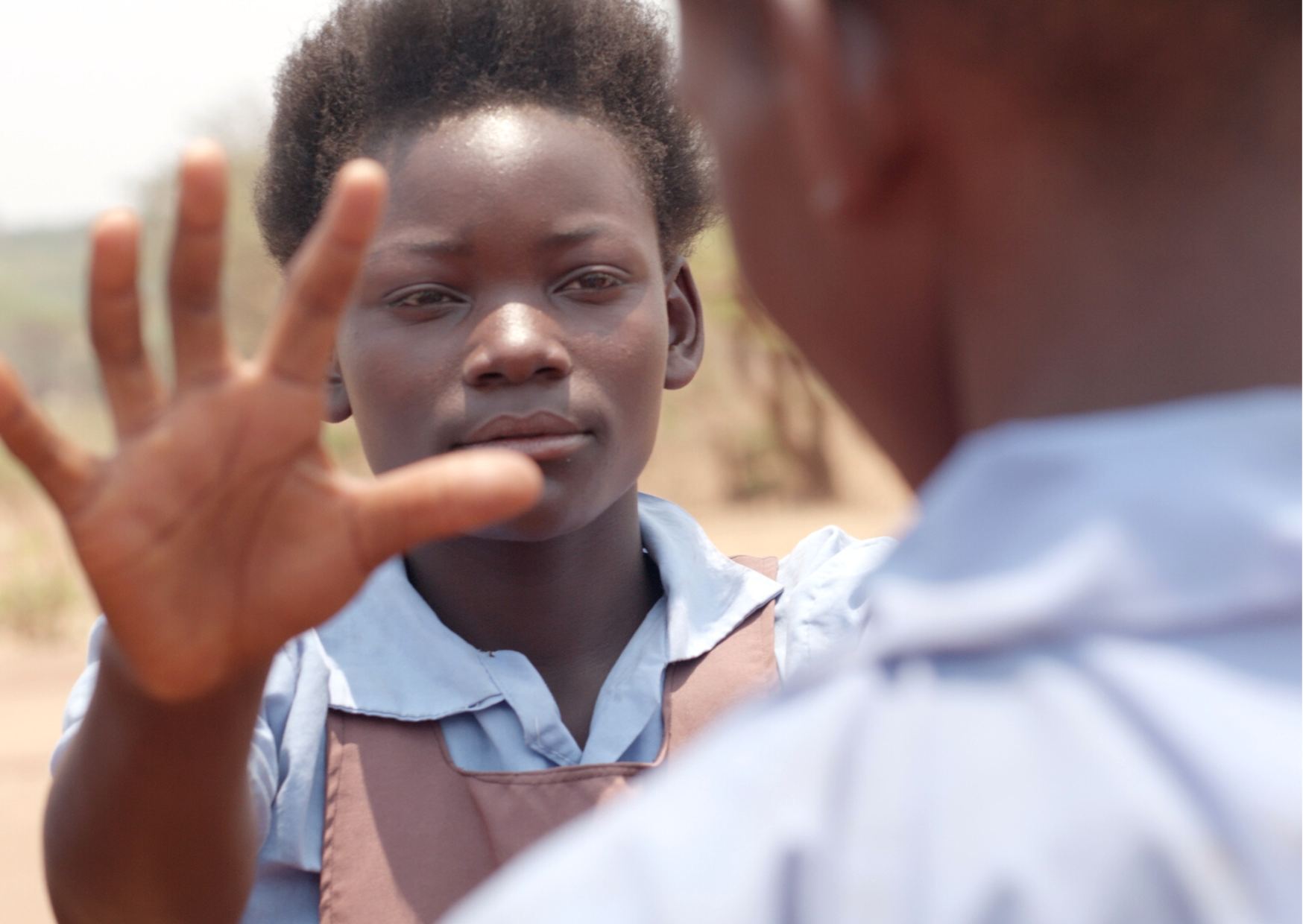
Children learn through play how to protect themselves against diseases such as HIV/AIDS, and they work through subjects such as gender inequality, physical and sexual violence, addiction and child marriage. Inclusiveness sits at the centre of the programme. Girls and children with a disability take an active part in the lesson and on the sports field, and teachers learn how to bring every child in.
Because Join for Joy’s intervention becomes part of the school system, Join for Joy has achieved the sustainable impact it strives for.
Four games, four lessons
Every game in the programme carries a subject inside it. These four show how that works in practice.
-
My Space Game
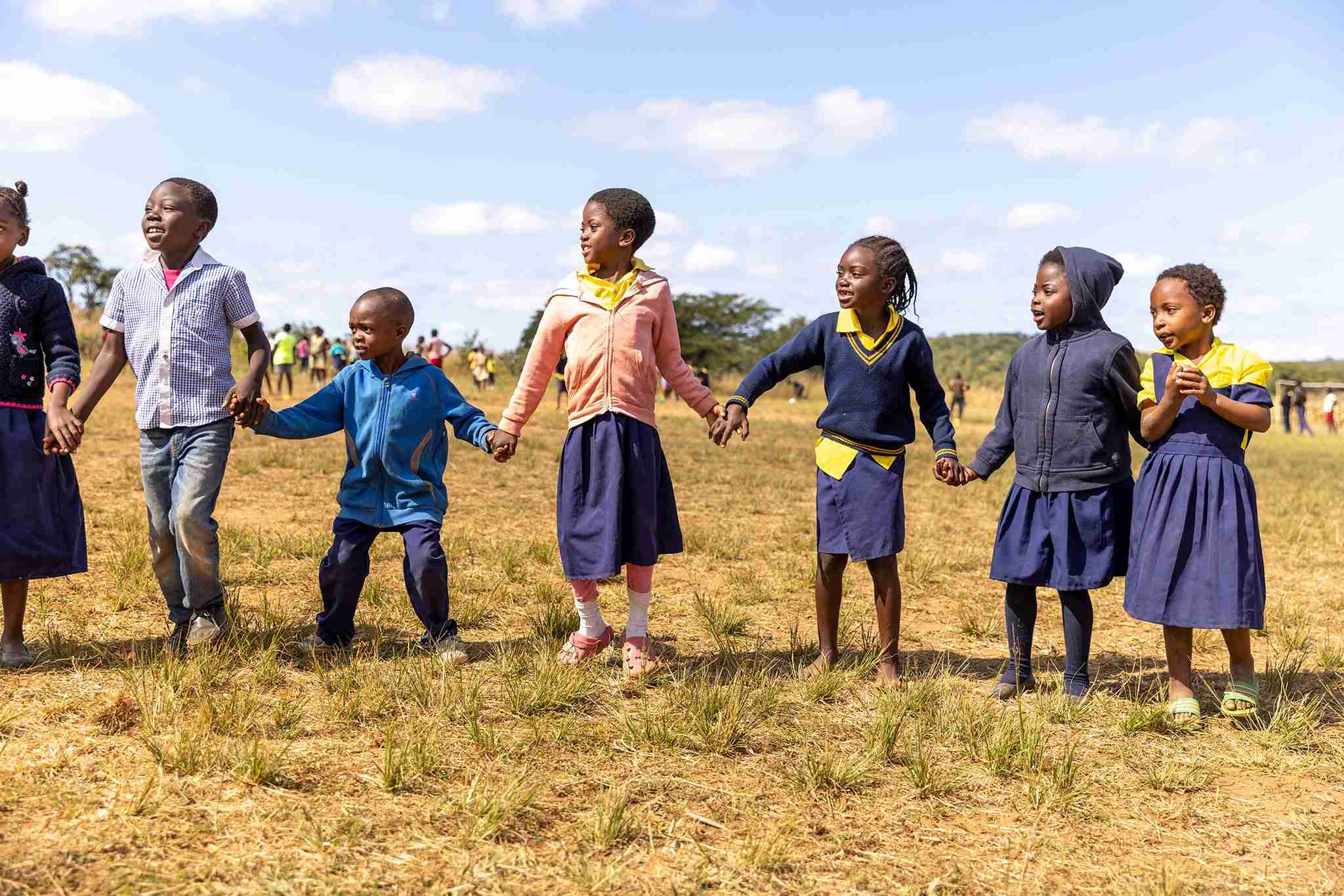
Everyone gets their own circle and tries to decorate it with the materials that are scattered around the field. If you leave your circle, you run a risk: other children can tag you, and then you must put one of your collected items back on the field. Other children can also steal items from your circle. This game teaches children to create and guard their own safe spaces.
-
Relay Race
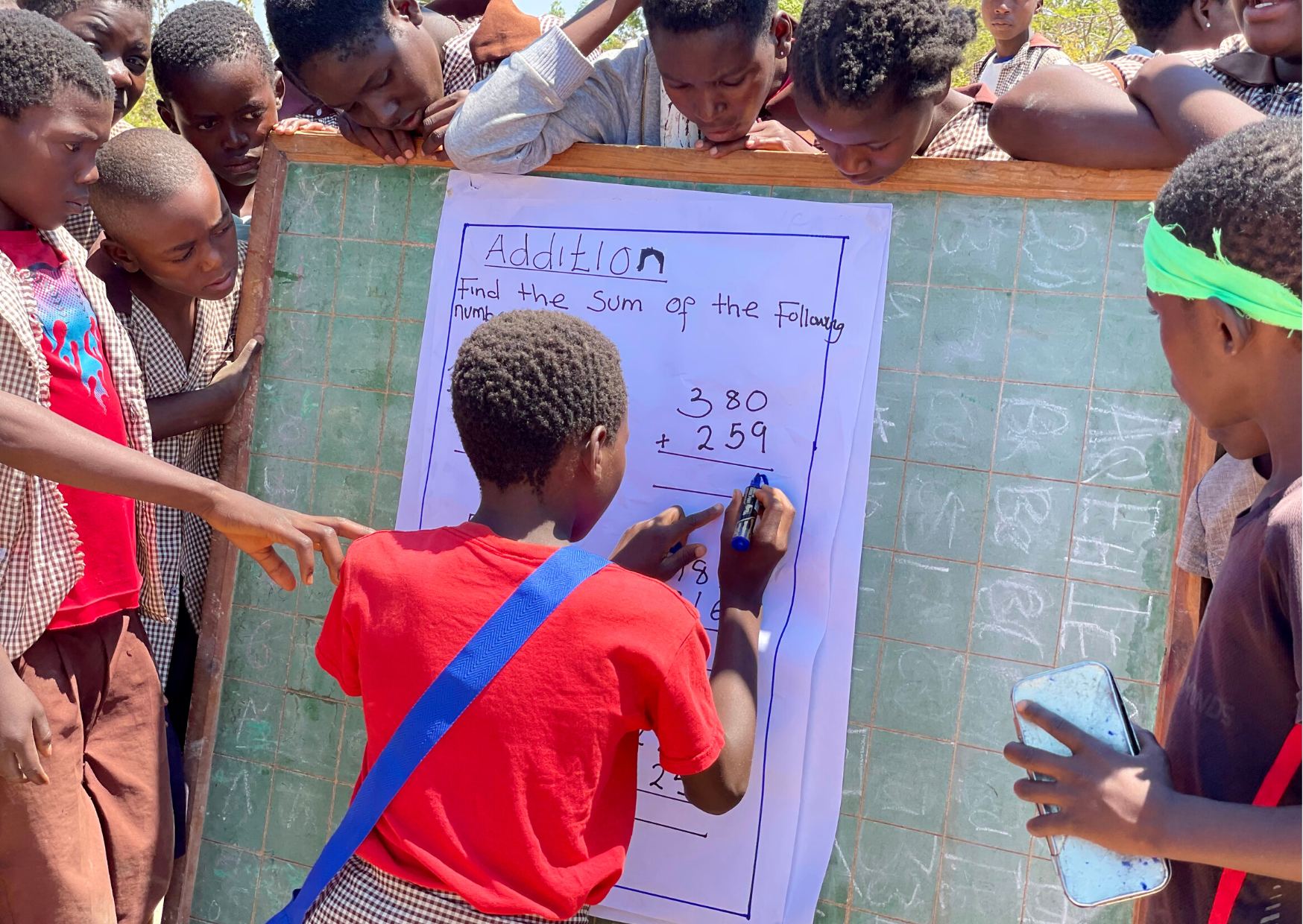
A relay race is a perfect way to discuss taboo topics such as gender equality and menstruation. The challenge is to write down a word that comes to your mind and has to do with the topic as quickly as possible. The game is also popular during regular classes. In the photo, children are practicing math. Which team is the fastest and solves the most sums correctly?
-
Bad Habit Run
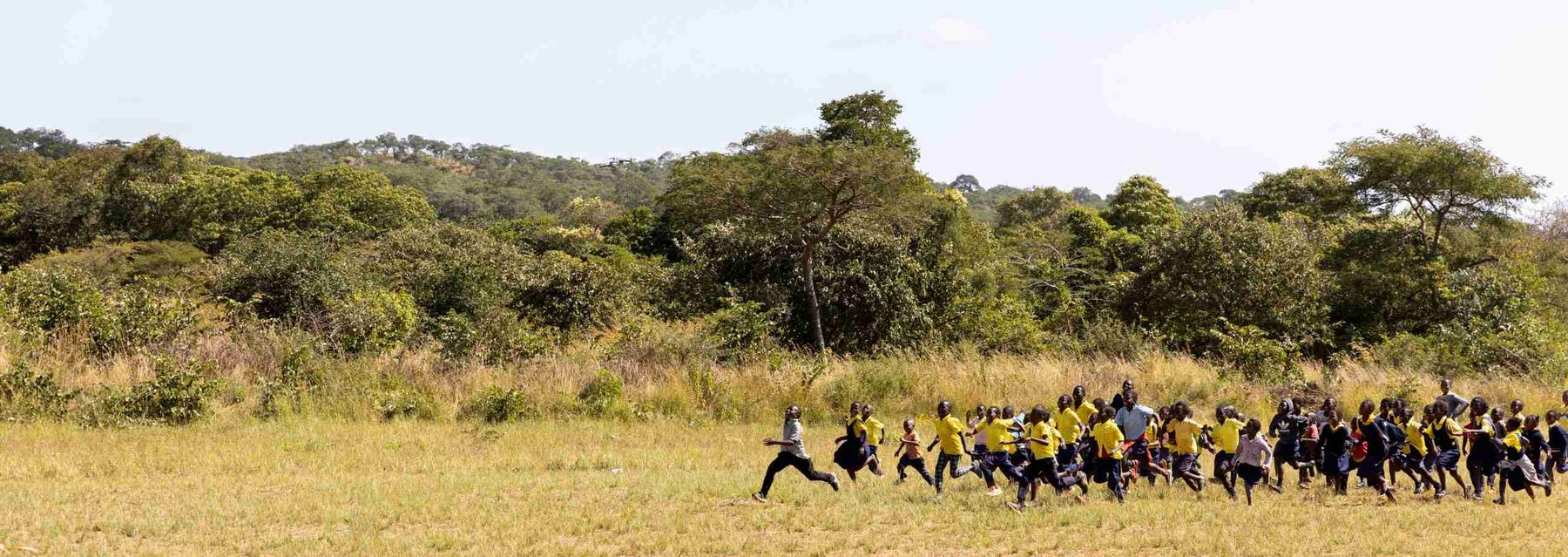
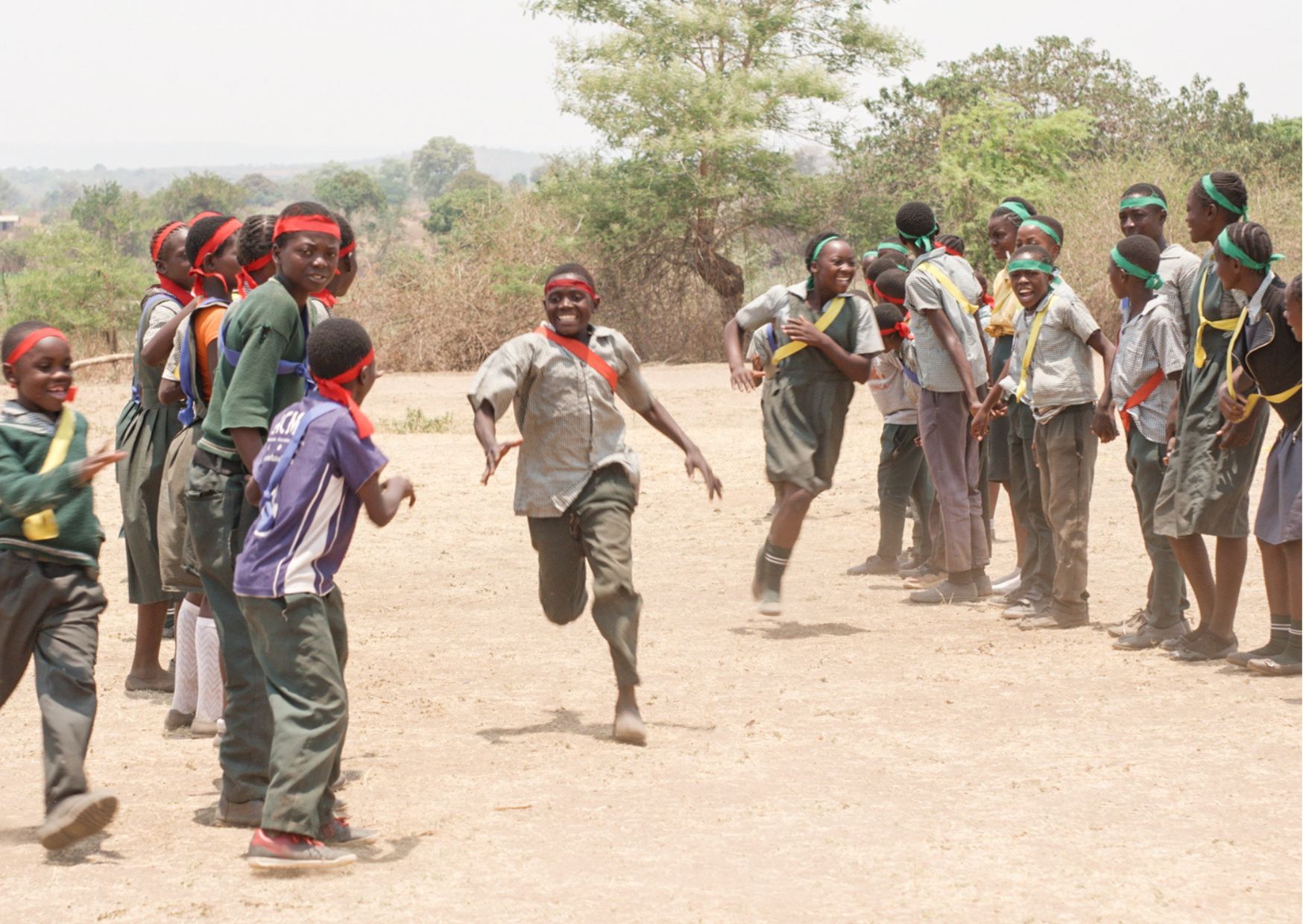
Kids try to get across the field without getting tagged by the ‘bad habit tagger’. Once you are tagged, you become part of the bad habit and get to tag the others too. Teachers use the game to discuss alcohol and drug use, skipping class, and bullying. It is easy to encounter bad habits and the more people involved, the more difficult it gets to avoid them.
-
Frustration Game
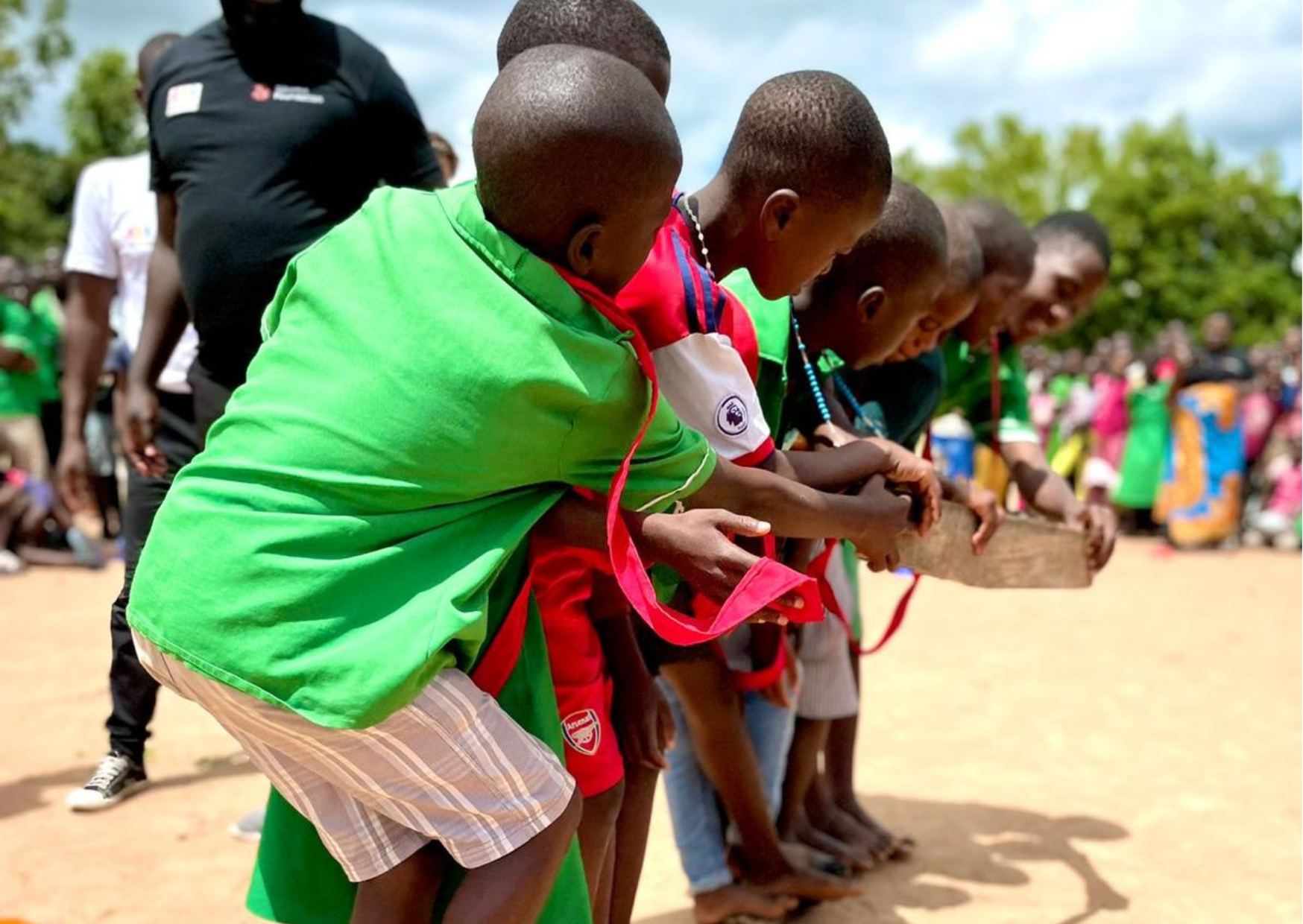
Two teams try to be the first to reach the other side of the field without touching the ground, by, for example, using stones, cardboard, and twigs. If a team fails, the whole game starts again. Dealing with setbacks, planning, collaboration, communication, and trust are central to this game.
Not only does Join for Joy increase children’s interest in school, the programme also helps to reduce social issues in communities such as teenage pregnancies, early marriages, domestic violence and alcohol and drug abuse.
Community involvement is crucial
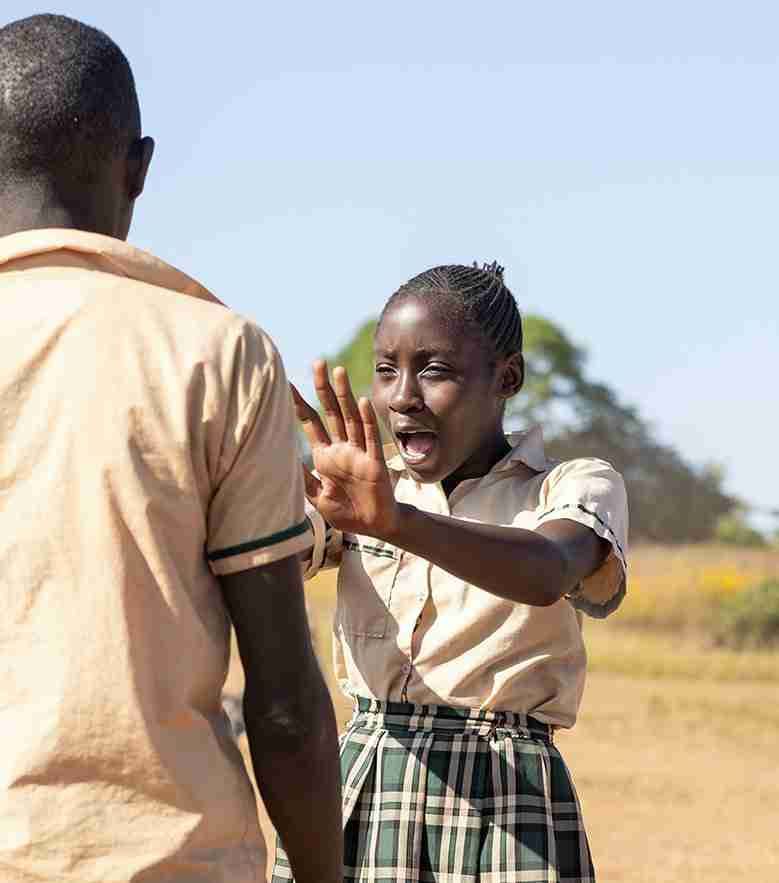
Parents, carers and other community members are regularly invited to sports tournaments and other activities at school. That draws the community in, and the knowledge woven into the games travels outward through it.
Teachers are also trained to run parent-teacher meetings well, so urgent subjects such as drug and alcohol abuse, child marriage, hygiene and the importance of sending children to school get discussed at home as well.
What teachers say after the training
Six of the teachers trained in 2025, in their own words. The programme only lasts if it changes how someone teaches on a Monday morning, so this is the evidence that matters most to us.
-
“The Join for Joy program has completely changed how I teach children with disabilities. Before, I did not actively involve learners with disabilities in leadership roles. I’ve learned how to identify the strengths of every learner and find ways to support them.”
Puye Primary School Malawi
-
“Before the training, I believed boys were stronger and more capable than girls, and unknowingly, I treated them better. I now make an effort to give compliments to both boys and girls. This has improved girls’ confidence and participation.”
Rusa Primary School Malawi
-
“Playing the Join for Joy games has made my classroom more vibrant and interactive. Through play-based learning, my lessons are purposeful and filled with fun, and I can align them with the curriculum goals.”
Chilanga Primary School Zambia
-
“Since the start of the program, the socialisation and interactions between the special needs children and the other learners in the mainstream program has improved. There is less stigma and labeling now, and more collaboration.”
Kalundu Primary School Zambia
-
“The training has helped me reflect on my way of teaching. I realized I need to make an extra effort to really involve children with disabilities in my class. When I return, I will share what I learned with my fellow colleagues.”
Juja Far Primary School Kenya
-
“After the training, I will be able to capture the attention of the learners I teach and improve their retention of information and knowledge. I hope this will help them succeed in the classroom, but also later in life!”
Mount Olive Primary School Kenya
Quotes from our 2025 annual report.
One programme, four ways in
Everything on this page connects to the rest of the programme. Read on wherever you like.